
Diseases still have a wide range of effects on people’s lives nowadays. They cause terrible social, economic, and financial consequences for countries, communities, families, and people in addition to public health issues. Though unevenly, the impact of these costs has spurred international efforts to combat the diseases. Africa bears 25% of the global disease burden yet accounts for less than 2% of the genomic data used in clinical studies.
As of April 2026, Africa’s population was estimated to be around 1.58 billion people, making up about 19% of the global population. Africa is currently the fastest-growing major region in the world, with an annual growth rate exceeding 2% in many areas. Aside from Africa’s large population trends, reports show that Africans have the most diverse population genetics, as they are considered the epicentre of modern human origin. Despite this, only a small portion of African genomic data is available to contribute to current efforts for global disease prevention and control, resulting in a genomic data gap (Wonkam, 2021). A genomic data gap is described as “the (intentional or unintentional) omission of genomic data of a group or subset of a population by researchers in a scientific effort or research that requires comprehensive genomic data.”
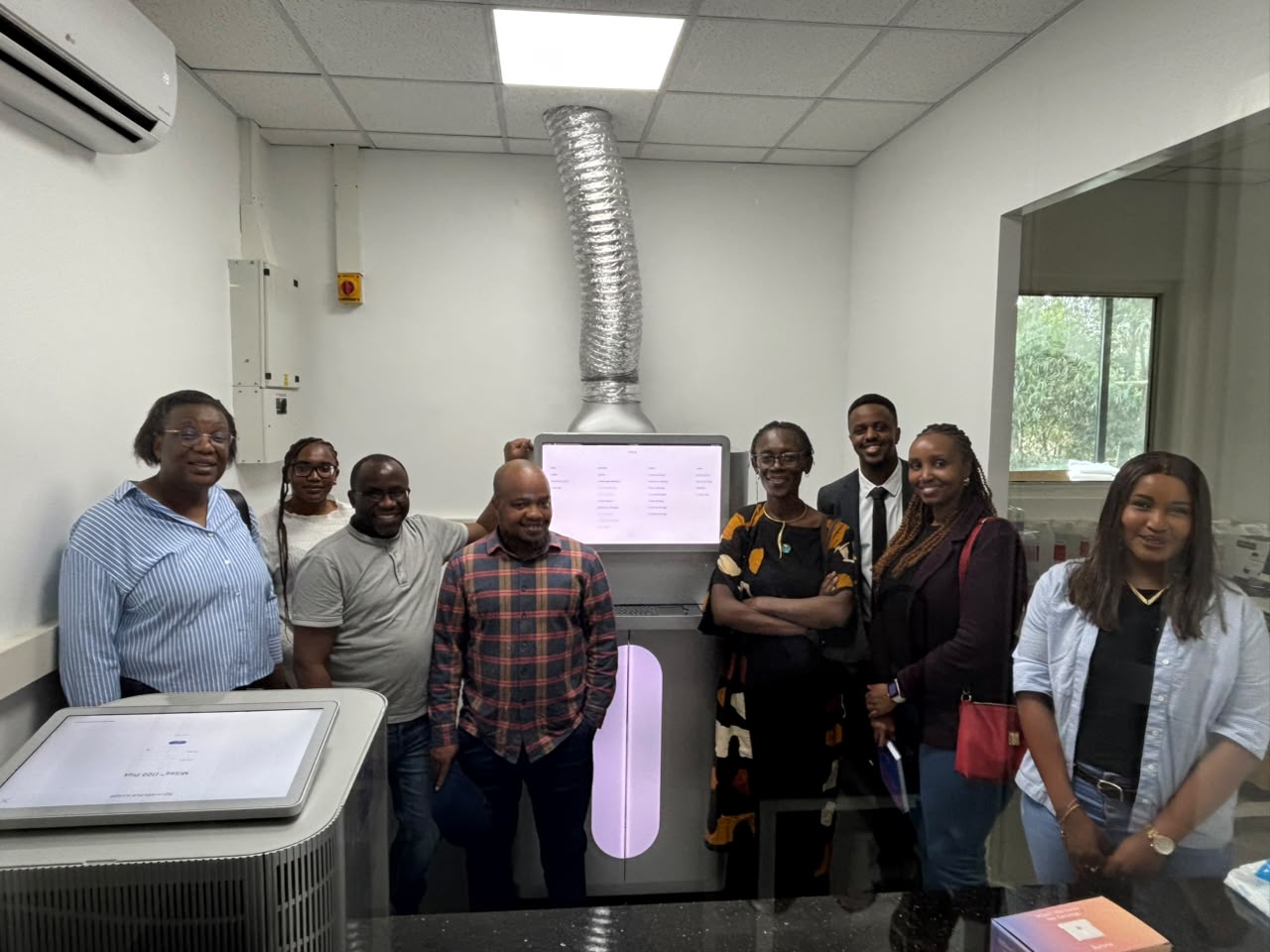
The most recent advances in research, especially precision medicine and vaccine production, have left Africa out, with genetic information accessible from the American, European, and Asian populations (Dalal, 2011). NextGen Molecular Lab wanted to fix a piece of that — but a company that’s profitable at small scale, with no institutional track record and a highly specialised asset (an Illumina NovaSeq X), is exactly the profile a commercial bank struggles to lend against.
Africa’s Healthcare Innovation Financing Gap
Healthcare innovation often requires substantial investment before revenue can scale. In NextGen’s case, the proposed financing was driven largely by the acquisition of the Illumina NovaSeq X sequencing platform and the supporting data-storage and bioinformatics infrastructure. For a lender, this creates a timing mismatch: capital goes out today, capacity is built, then customers are acquired and processed, and cash flows are generated over time. The lender therefore has to be comfortable that the additional capacity will actually translate into sufficient cash flow to service the debt.
Specialised healthcare infrastructure thus may take time to reach full utilisation. The borrower therefore needs sufficient runway to build volumes, establish commercial relationships and generate predictable cash flows. From a lender’s perspective, longer repayment periods mean more time for something to go wrong whether operationally, commercially, technologically or economically. The problem is thus not necessarily a lack of viable healthcare businesses. It is often a mismatch between the risk profile of innovative businesses and the risk appetite of traditional lenders.
From Genomics to Bankability: The NextGen Case
NextGen Molecular Lab provides a compelling example of how risk transfer can help bridge the gap between healthcare innovation and access to capital.
The company operates across commercial genomics services and molecular diagnostics, with a dual-company structure designed to leverage high-throughput sequencing technology for both research and clinical applications.
The proposed investment centred on the acquisition of an Illumina NovaSeq X sequencing platform and the development of supporting data-storage and bioinformatics capabilities. The financing requirement presented was US$3.5 million, with the facility structured as a five-year term loan.
From a lender’s perspective, however, financing such an investment involves more than assessing the attractiveness of the underlying technology. The lender must consider whether the additional capacity will translate into sustainable revenues and sufficient cash flow to service the debt, while also assessing the recoverability of the financed assets in a downside scenario.
NextGen’s underlying fundamentals provided important comfort. The investment materials describe the business as a scale-up rather than a startup, with revenues growing at an average annual rate of 20% and EBITDA margins remaining above 40%. The company also identified significant demand for high-throughput sequencing and cited more than 32,000 committed samples, alongside relationships with pharmaceutical companies, hospitals and research institutions.
The proposed financing was nevertheless supported by a credit insurance structure designed to indemnify the financing bank against potential losses arising from borrower non-payment due to insolvency or protracted default. The credit risk protection formed part of the financing architecture itself. By transferring defined credit risk away from the lender, the structure helped make the underlying healthcare investment more acceptable from a credit-risk perspective.
The proposed security package further included assignment over the financed asset and associated receivables, domiciliation of sample-processing revenues, a debt service reserve account, guarantees and other forms of security.
The NextGen case therefore illustrates an important principle: innovative healthcare businesses do not necessarily lack bankable economics; rather, their risk profile may not always fit neatly within conventional lending frameworks.
This is where specialist underwriting and reinsurance capacity can play a catalytic role converting complex and emerging risks into structured, measurable and transferable exposures.
In this sense, the transaction demonstrates how insurance can move beyond being a traditional risk-transfer product to becoming part of the infrastructure that enables capital to reach innovative healthcare businesses.
The Bigger African Opportunity
The real opportunity extends far beyond a single transaction.
If structured effectively, credit insurance and reinsurance capacity can support a broader financing ecosystem for Africa’s healthcare and life-sciences sectors. Diagnostics, pharmaceutical manufacturing, biotechnology, medical technology, clinical research, cold-chain infrastructure and healthcare logistics all require significant capital, while many businesses operating in these areas may not fit neatly within traditional bank lending models.
This creates an opportunity to think about risk capacity as a form of development capital.
Development capital is not only the money invested in a project. It can also be the risk-bearing capacity that enables other pools of capital to participate.
The NextGen case demonstrates how this mechanism can work in practice. The proposed investment was intended to expand local genomic sequencing capacity, reduce dependence on international testing infrastructure, lower sequencing costs and support clinical research and precision medicine in the region. The investment materials also identify potential employment, skills development and broader public-health benefits.
The implication is significant. The role of the insurer or reinsurer does not have to end at protecting the lender from a potential loss. By providing credible risk-bearing capacity, the insurance market can help create the conditions under which banks and other capital providers are willing to finance businesses that might otherwise struggle to access debt.
The opportunity, therefore, is to move from viewing individual guarantees as isolated transactions to building risk-transfer structures that can support entire sectors.
If replicated across African healthcare markets, this approach could help bridge the gap between innovative businesses with demonstrable commercial potential and financial institutions seeking sufficient protection to deploy capital.
The question is no longer simply whether Africa has healthcare innovators worthy of investment. Increasingly, the question is whether the financial system has sufficient risk capacity, underwriting expertise and innovative structures to allow those businesses to scale.
Prepared by: Ann Njoroge