
Q1 2026 was the latter.
From policy conversations in Accra to global risk forums in London, from innovation dialogues in Cape Town to ground-level engagement in Addis Ababa — and culminating in our own inaugural conference in Dar es Salaam — this was a quarter that connected the dots across Africa’s trade ecosystem. Not in theory. In practice.
Here is what we learned.
Africa Is Trading More — But Financing Hasn’t Kept Up
At the Africa Trade Summit in Accra, the energy around AfCFTA was real. The framework is producing actual trade flows, real partnerships, tangible momentum.
But the financing gap hasn’t closed. SMEs — the backbone of intra-African trade — are still navigating systems that weren’t designed for them.
For Underwriting Africa, this confirmed something we keep coming back to: trade cannot scale without risk solutions built for the realities of African businesses.
Local Risk Is Now Shaped by Global Forces
At ExCred International in London, the conversation widened.
Geopolitical tensions, regulatory shifts, and sustainability pressures are no longer abstract concerns for African markets — they are actively shaping capital flows and underwriting decisions. Risk is systemic and interconnected in ways it simply wasn’t a decade ago.
For businesses and institutions operating across Africa, this means two things: access to global capital increasingly depends on alignment with international standards, and even local transactions are influenced by global risk sentiment.
At Underwriting Africa, we see this as a call to operate at both levels — globally informed, locally precise.
The Tools for Modern Trade Finance Exist. Access Doesn’t.
The GTR Conference in Cape Town put the future of trade finance on full display: digital underwriting, alternative data, embedded finance, supply chain visibility.
The tools are here. The efficiency gains are real.
But so is the gap. While some markets are rapidly adopting these innovations, others remain constrained by limited data and infrastructure. That uneven distribution of progress is both a risk and an opportunity — because where traditional systems fall short, innovation becomes a necessity, not a luxury.
For Underwriting Africa, digital adoption isn’t about staying current. It’s about expanding who gets access to trade finance, and how fast we can reach them.

Ethiopia: Opportunity That Demands Context
Our trade mission to Addis Ababa brought the conversation back to earth.
Ethiopia is changing — deliberately, at scale, and with serious policy intent. Economic reforms and infrastructure investment are opening real doors.
But opportunity here doesn’t come pre-packaged. It requires understanding regulatory nuance, navigating political dynamics, and building the right local relationships. Many external models fail at exactly this point — and it’s where African institutions have a genuine advantage, if they lean into it.
This is what Underwriting Africa means by translating markets: bridging opportunity with the context required to actually capture it.
Dar es Salaam: Building a Market, Not Just Serving One
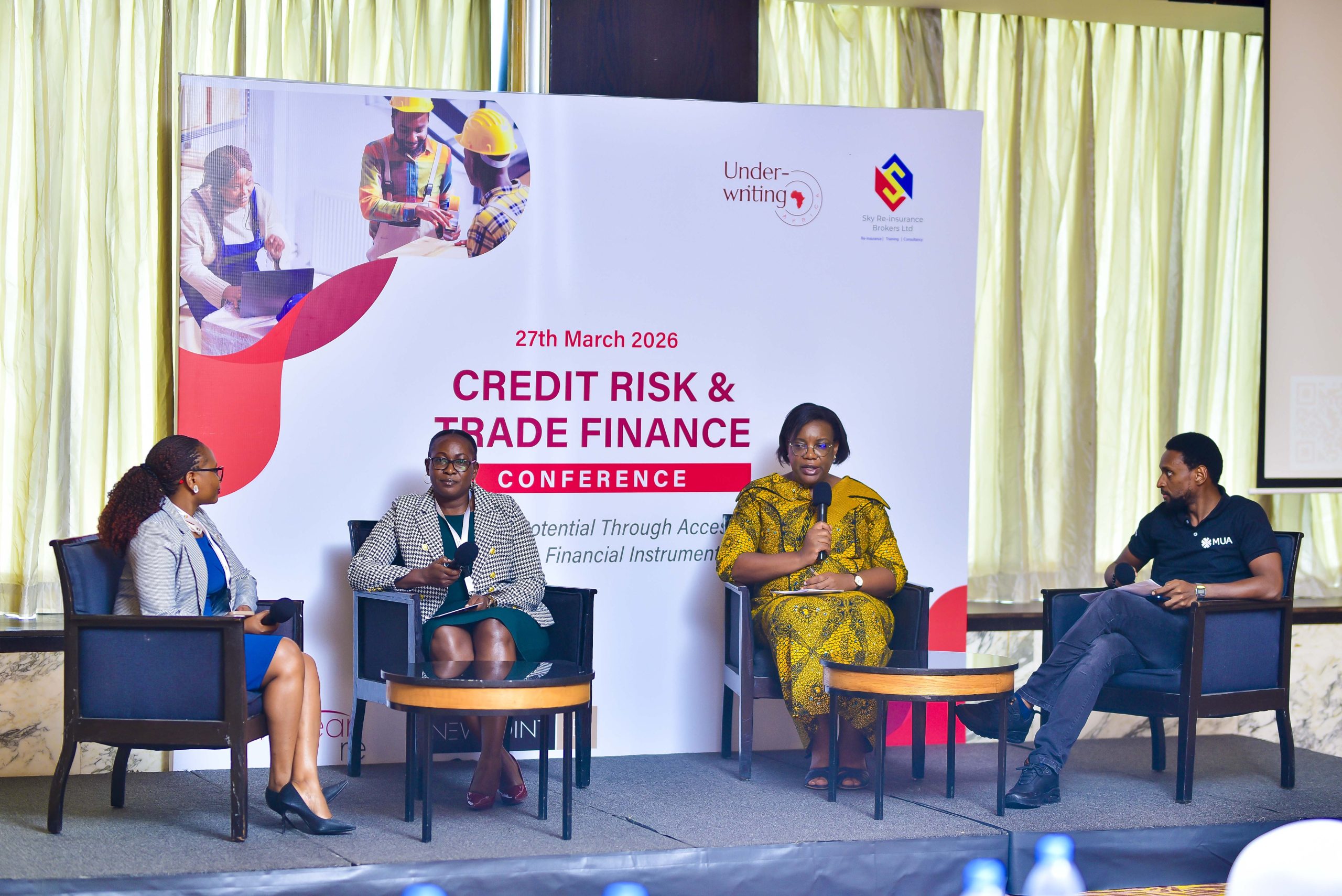
The Credit Risk & Trade Finance Conference Tanzania in Dar es Salaam was different from everything else this quarter — because we didn’t just attend it. We built it, together with Sky Re.
And that distinction matters.
One of the clearest signals from across all five engagements was this: demand for risk solutions is growing faster than understanding of them. Businesses want to adopt trade credit insurance. Banks are open to structured solutions. Brokers want to expand. But there’s a knowledge gap — in familiarity, in confidence, in how these products actually work.
Our inaugural conference was designed to close that gap.
Not as a one-off event, but as part of a long-term commitment to market education. Because markets don’t grow on products alone — they grow on understanding. And for Underwriting Africa, market education isn’t a side initiative. It’s core strategy.

The Bigger Picture
Across five cities, five different conversations, one pattern held:
Africa’s trade ecosystem is expanding. Its risk infrastructure is still catching up.
That gap is where the real work is. It’s also where the real opportunity is.
For Underwriting Africa, Q1 2026 didn’t just validate what we do — it sharpened how we need to do it: designing for SMEs, integrating global standards with local intelligence, investing in digital access, and committing to education as a business imperative.
The path forward is clearer. And we’re moving.